

Thermal imaging UAVs are game-changers for inspections, security, and search ops. But not every “thermal camera” setup belongs in the sky. Here’s a tight breakdown so you don’t waste cash on the wrong gear.
Top 6 UAV Thermal Imaging Cameras
| Camera | Thermal Resolution | Battery Life | Special Feature | Best For |
| Autel EVO MAX 4N V2 | Pro-grade thermal + multi-sensor | 42 mins | 4 cameras + anti-jamming | Serious UAV ops |
| TOPDON TC004 Mini | 240×240 TISR | 15 hrs | Compact handheld | Budget thermal use |
| HF96 Thermal Camera | 240×240 enhanced | 11 hrs | Laser pointer | DIY + diagnostics |
| FOXWELL RT280 | 320×240 | Moderate | Recording + storage | Inspections |
| Teslong TTM120S | 240×180 | Good | Lightweight | Entry-level |
| Generic 320×240 Thermal | 320×240 | 8 hrs | Temp alerts | Home + basic checks |
Best UAV Thermal Imaging Camera Options That Get Results
If you’re serious about aerial thermal imaging, only one option here truly fits UAV use. The rest are solid—but mainly ground-based backups or budget tools.
Autel Robotics EVO MAX 4N V2 – Best UAV Thermal Imaging Camera
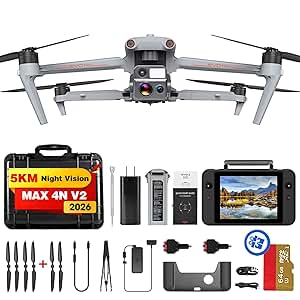
This is the real deal—a fully loaded drone with thermal, night vision, wide-angle, and laser systems built in. Designed for law enforcement, industrial inspection, and search & rescue, it’s not a toy—it’s a mission tool.
It packs four cameras in one system, including thermal imaging and starlight night vision, with up to 42 minutes flight time. You also get 720° obstacle avoidance and anti-jamming tech, which is huge for complex environments. Hot-swappable batteries keep downtime low. If you need a legit UAV thermal setup, this is it.
TOPDON TC004 Mini Thermal Imaging Camera
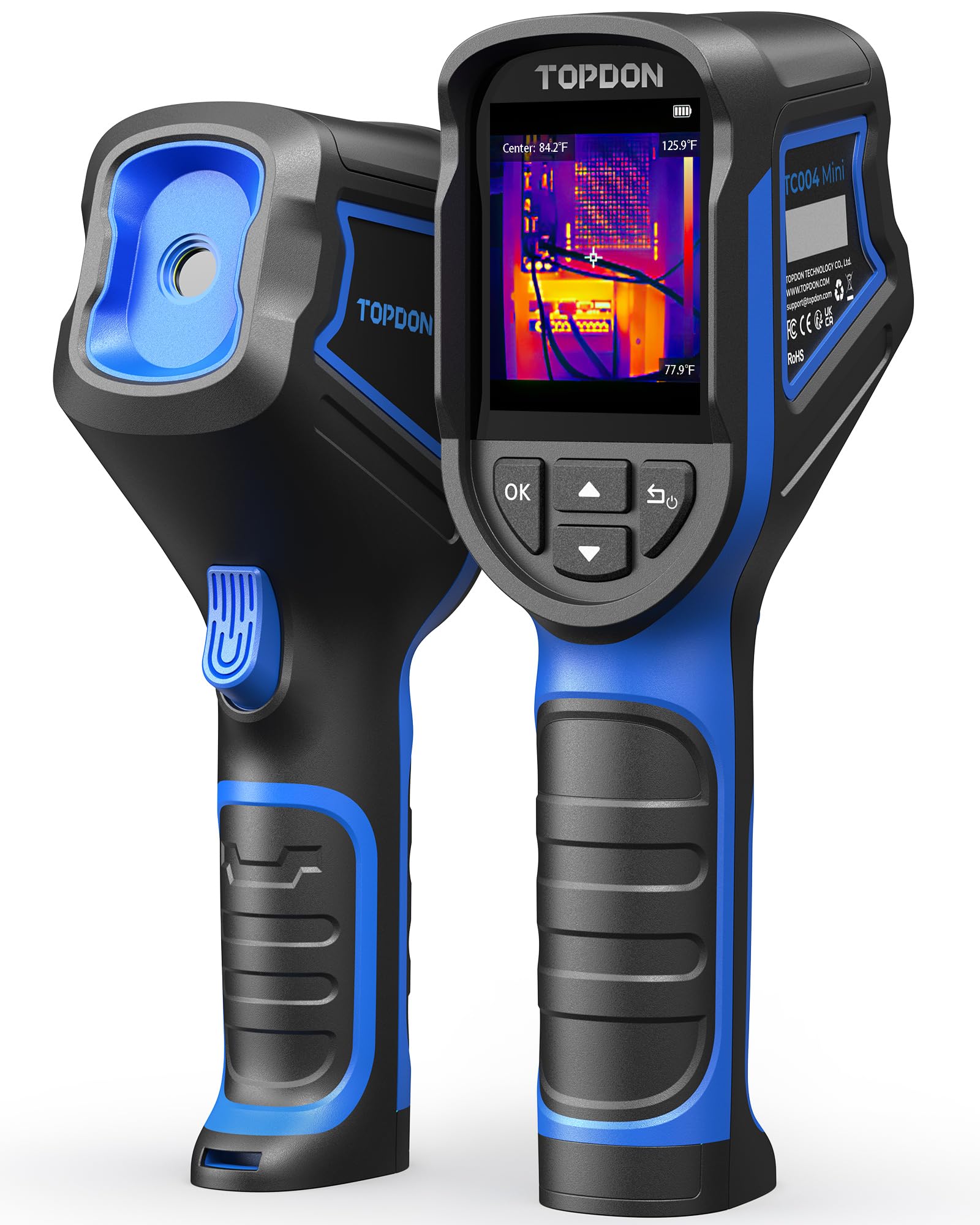
A pocket-sized thermal cam that’s perfect for quick scans but not for drones. Think HVAC checks, electrical troubleshooting, or spotting leaks.
It offers 240×240 TISR resolution with a long 15-hour battery life. You also get high/low temperature alerts and a smooth 25Hz refresh rate. Solid for ground work, not aerial use.
HF96 Thermal Camera with Laser Pointer

This one’s a handy field tool with a built-in laser pointer—great for pinpointing heat sources fast.
It delivers enhanced 240×240 imaging and works across a wide temperature range (-4°F to 1022°F). With 11-hour runtime and intelligent scene detection, it’s useful for inspections but not UAV-compatible.
FOXWELL RT280 Thermal Imaging Camera

A step up in resolution and features for serious inspection work.
It offers 320×240 resolution, onboard storage, and the ability to capture photos/videos. The PC analysis support makes it great for professionals reviewing thermal data—but again, handheld only.
Teslong TTM120S Thermal Imaging Camera
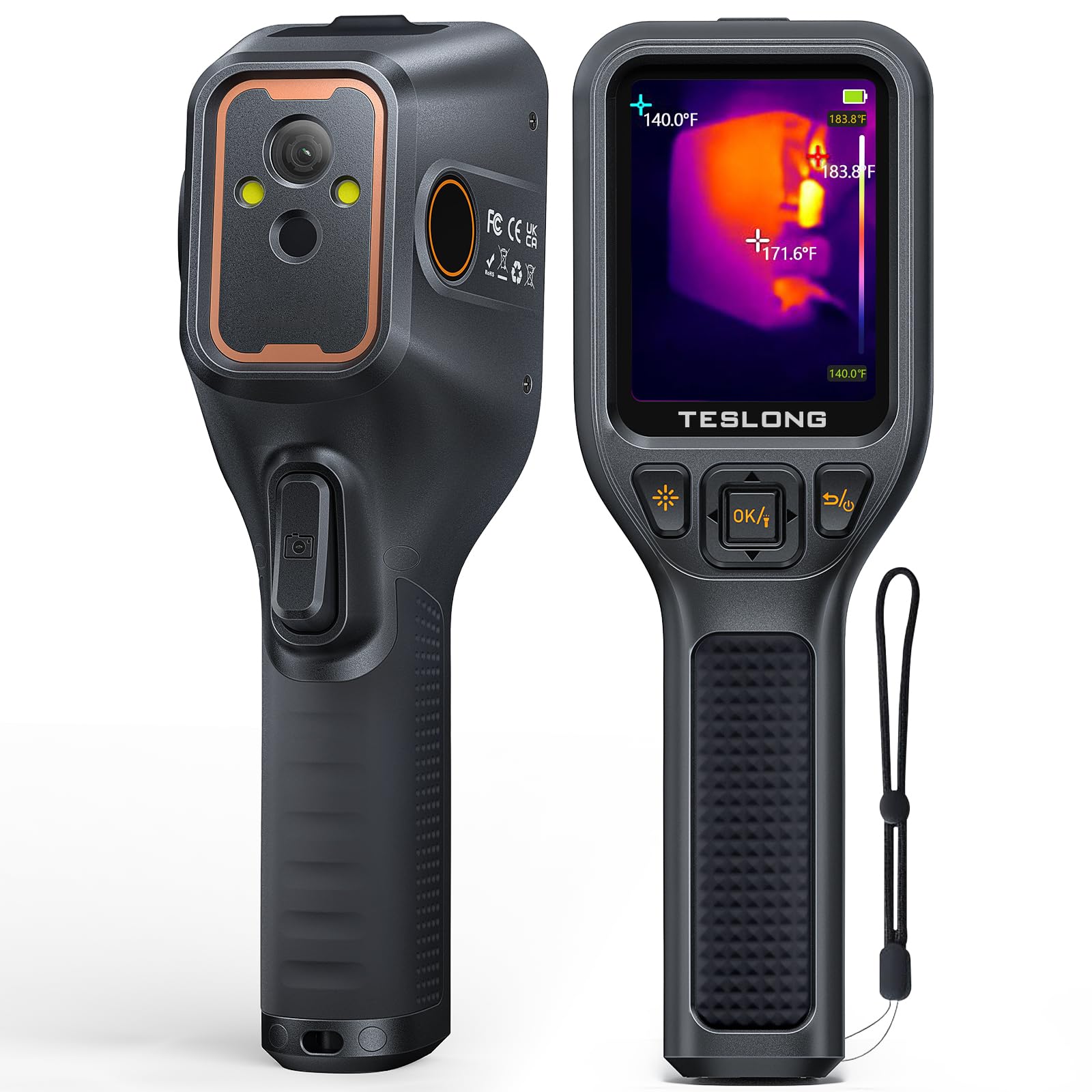
A budget-friendly option that gets the job done for basic thermal needs.
With 240×180 super resolution and a 25Hz refresh rate, it’s decent for home inspections and simple diagnostics. Not built for UAV integration.
Handheld Thermal Imaging Camera 320×240

A generic but capable thermal cam for everyday use.
It includes 320×240 resolution, temperature alarms, and 8-hour battery life. Ideal for spotting leaks or insulation issues—but not for aerial deployment.
How To Choose The Right Thermal Drone Setup
- True UAV Compatibility Matters
Most thermal cameras aren’t made for drones. If it doesn’t explicitly integrate with a UAV system, skip it. Mounting handheld cams is risky and inefficient. - Thermal Resolution = Real Detail
Look for at least 320×240 if you want usable aerial data. Lower resolutions can miss critical heat signatures, especially from altitude. - Flight Time Is Mission Time
Anything under 30 minutes can limit real-world use. Swappable batteries are a huge plus for extended ops. - Multi-Sensor Systems Win
Thermal alone isn’t always enough. Pairing it with night vision or optical zoom (like Autel does) gives you way better situational awareness. - Anti-Interference Tech Is Critical
In urban or high-signal areas, interference can kill your feed. Systems with anti-jamming tech are worth the extra cash. - Use Case Defines Budget
- Casual/home use → handheld is fine
- Professional inspection/security → go UAV-grade
- Search & rescue → don’t cheap out
Final Advice:
Avoid trying to “hack” a drone setup with handheld thermal cameras. It’s unreliable, unsafe, and usually ends up costing more in the long run. If aerial thermal imaging is the goal, invest in a purpose-built UAV system from the start.