

You can’t fix what you can’t see. Whether you’re hunting for a drafty window, a hot circuit breaker, or a leaky pipe, the best infrared camera turns invisible problems into bright, color-coded evidence. We’ve rounded up five rugged, high-refresh-rate units that deliver crisp thermal data without the enterprise-level price tag. Get the job done right the first time.
Best Infrared Camera Comparison
| Model | IR Resolution | Battery Life | Temp Range | Key Strength |
| TOPDON TC004 Mini | 128 x 128 | 15 Hours | -4°F to 1022°F | Best Endurance |
| GT14S Thermal | 240 x 240 (TISR) | 14 Hours | -4°F to 1022°F | Ultra-Lightweight |
| HF96 Laser | 96 x 96 | 11 Hours | -4°F to 1022°F | Laser Precision |
| FOXWELL RT280 | 240 x 180 (TISR) | 8 Hours | -4°F to 662°F | PC Analysis & Video |
| Generic 240×240 | 240 x 240 (TISR) | 10 Hours | -4°F to 1022°F | Wide Field of View |
Upgrade Your Toolbox With The Best Infrared Camera
Investing in a thermal imager is like gaining a superpower for your home or job site. These devices don’t just show heat; they provide the data needed to prevent electrical fires and mold growth. From pinpointing “ghost” draws in a car’s wiring to auditing an HVAC system, these cameras are the ultimate “no-BS” diagnostic partners.
TOPDON TC004 Mini Thermal Camera
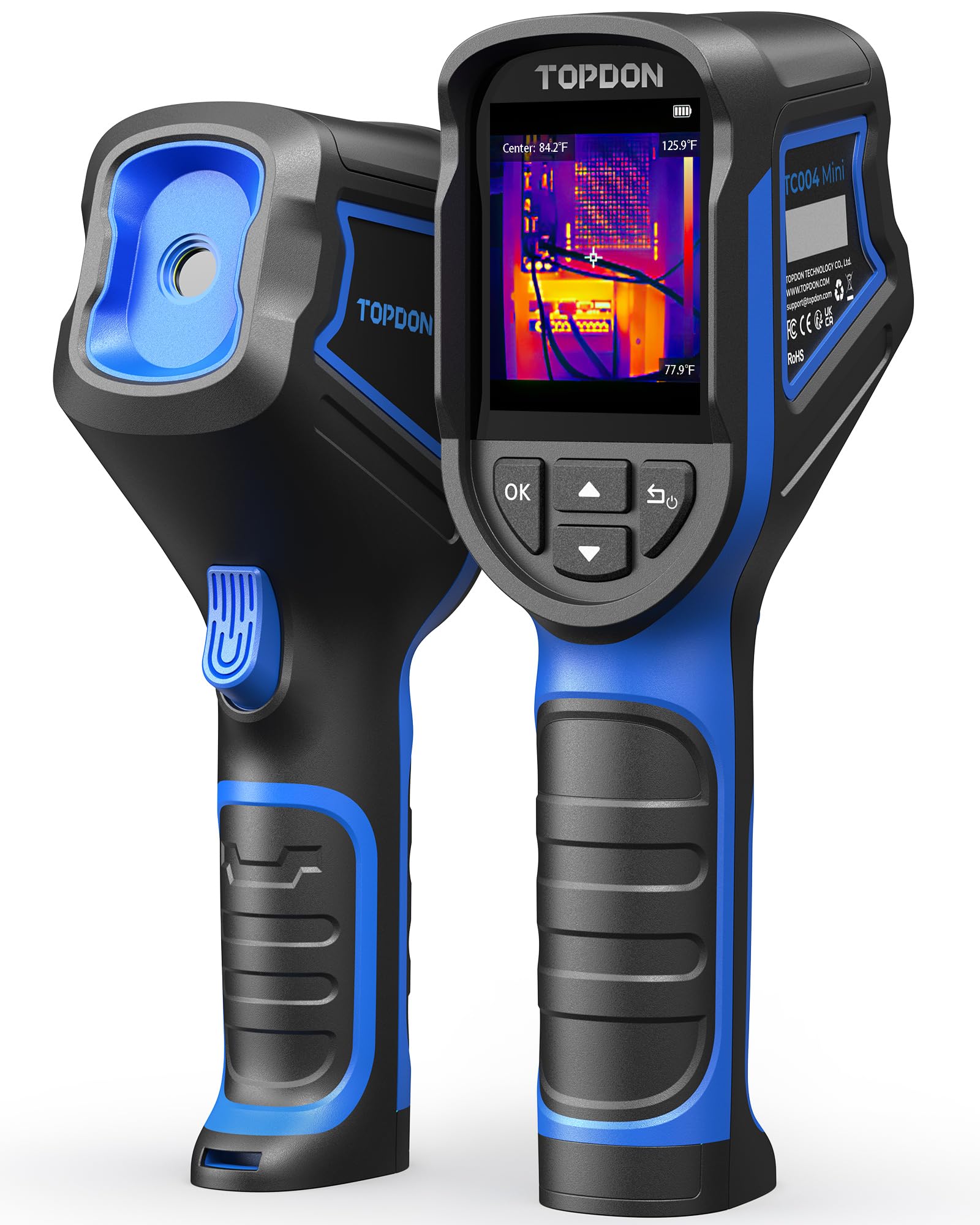
This TOPDON unit is a total marathon runner for your tool bag. It’s built for the guy who doesn’t want to worry about his gear dying mid-shift. With its “set it and forget it” auto-shutdown and high/low temp alerts, it’s a reliable beater that handles the grimiest garage environments while delivering a smooth 25Hz frame rate so the image doesn’t stutter when you move.
It features a 128 x 128 native IR resolution enhanced by TISR technology for a 240 x 240 visual output. The 15-hour battery life is the gold standard in this price bracket, ensuring you can pull a double shift without hitting the charger. It also includes an internal 8GB memory to store all your “before and after” proof for clients.
GT14S Thermal Imaging Camera

If you’re tired of lugging around heavy gear, the GT14S is your huckleberry. Weighing in at just 240g, it’s feather-light but punches way above its weight class in terms of display clarity. The edge-enhanced display makes it much easier to identify exactly which pipe or wire is acting up by sketching outlines over the heat signatures.
This unit supports a massive temperature range from -4°F all the way up to 1022°F, making it versatile for both fridge repairs and industrial kilns. It boasts a 14-hour runtime and a 2.8-inch screen that tracks live hot and cold spots in real-time. The thermometer mode adds an extra layer of utility for quick spot checks without full imaging.
HF96 Thermal Camera with Laser Pointer

Precision is the name of the game with the HF96. While the native resolution is a bit lower, the intelligent scene detection and laser pointer mean you’ll never guess which component you’re actually looking at. It’s a solid pick for HVAC techs who need to point out specific leaks to homeowners from across a dark attic.
The device offers an 11-hour runtime and utilizes a 25Hz refresh rate for fluid motion. It handles the same wide temperature spectrum as the pro units and features a 2.4-inch display. The laser pointer integration is the standout feature here, acting as a physical guide to match the digital heat map on your screen.
FOXWELL RT280 Thermal Imager

The FOXWELL RT280 is the “brainiac” of the bunch, designed specifically for those who need to document their findings and analyze them on a big screen later. Unlike simpler models, this one excels at photo and video recording, making it the perfect choice for professional inspectors who need to include thermal evidence in their final reports.
Equipped with a 240 x 180 TISR resolution and a large 2.8-inch LCD, it provides a very readable interface for diagnostic work. It includes a laser for targeting and comes with PC analysis software to dive deep into the data post-inspection. The 8GB of storage ensures you won’t run out of space while filming a hot circuit board.
240×240 TISR Infrared Camera

This no-name powerhouse is all about the field of view. With a 50° FOV, it lets you see more of the wall or the engine bay at once without having to back up into a corner. It’s a straightforward, high-resolution tool for those who want maximum “bang for their buck” in terms of raw pixels and thermal sensitivity.
It delivers a 240 x 240 TISR resolution and a fast 25Hz refresh rate for a clear, lag-free experience. The temperature alarm is a lifesaver, chirping at you the moment it detects a surface exceeding your pre-set safety limits. It covers the standard high-heat range up to 1022°F, making it a rugged all-rounder for DIYers.
Pro Tips For Finding Your Perfect Thermal Tool
Choosing the right thermal imager isn’t just about picking the highest number on the box. First, look at the Refresh Rate (Hz). Anything below 25Hz will feel like a laggy slideshow when you move your hand; for smooth scanning, 25Hz is the sweet spot. Second, consider the Native vs. Interpolated Resolution. Native resolution is the actual sensor power, while TISR or Super Resolution uses software to sharpen the image. If you’re doing fine electrical work, native resolution is king.
Third, check the Battery Life. If you’re a pro, you need at least 10 hours. There’s nothing worse than your gear “bricking” when you’re halfway through a crawlspace. Fourth, look for Temperature Alarms. This allows you to scan a large area quickly—the camera will literally beep when it finds a hot spot, so you don’t have to squint at the screen the whole time. Finally, ensure the Temperature Range matches your needs; automotive and industrial work require 1000°F+ capacity, while home energy audits only need standard ranges.
What to Avoid: Stay away from units that don’t offer adjustable Emissivity. Different surfaces (like shiny copper vs. matte wood) reflect heat differently. If you buy a “fixed” camera, your temperature readings on metal will be completely wrong, leading to expensive mistakes. Don’t get seduced by a massive screen if the sensor resolution is tiny—it’ll just be a giant, blurry mess.